News
2026
What the world found was this land

The name Né holds two meanings. In Japanese, ne — the root, reaching down into the earth, drawing up what feeds the tree. In French, né — “born.” To go deep into the ground, and to be born from it. Both, in this one place.
In June 2026, Né was named Popular Choice Winner in the Architecture + Environment category of the Architizer A+Awards 2026 — a category prize decided by a public vote gathering entries from more than eighty countries.
We are honoured. And yet, if we are honest, this first place does not feel like ours. It feels like recognition of the land itself.
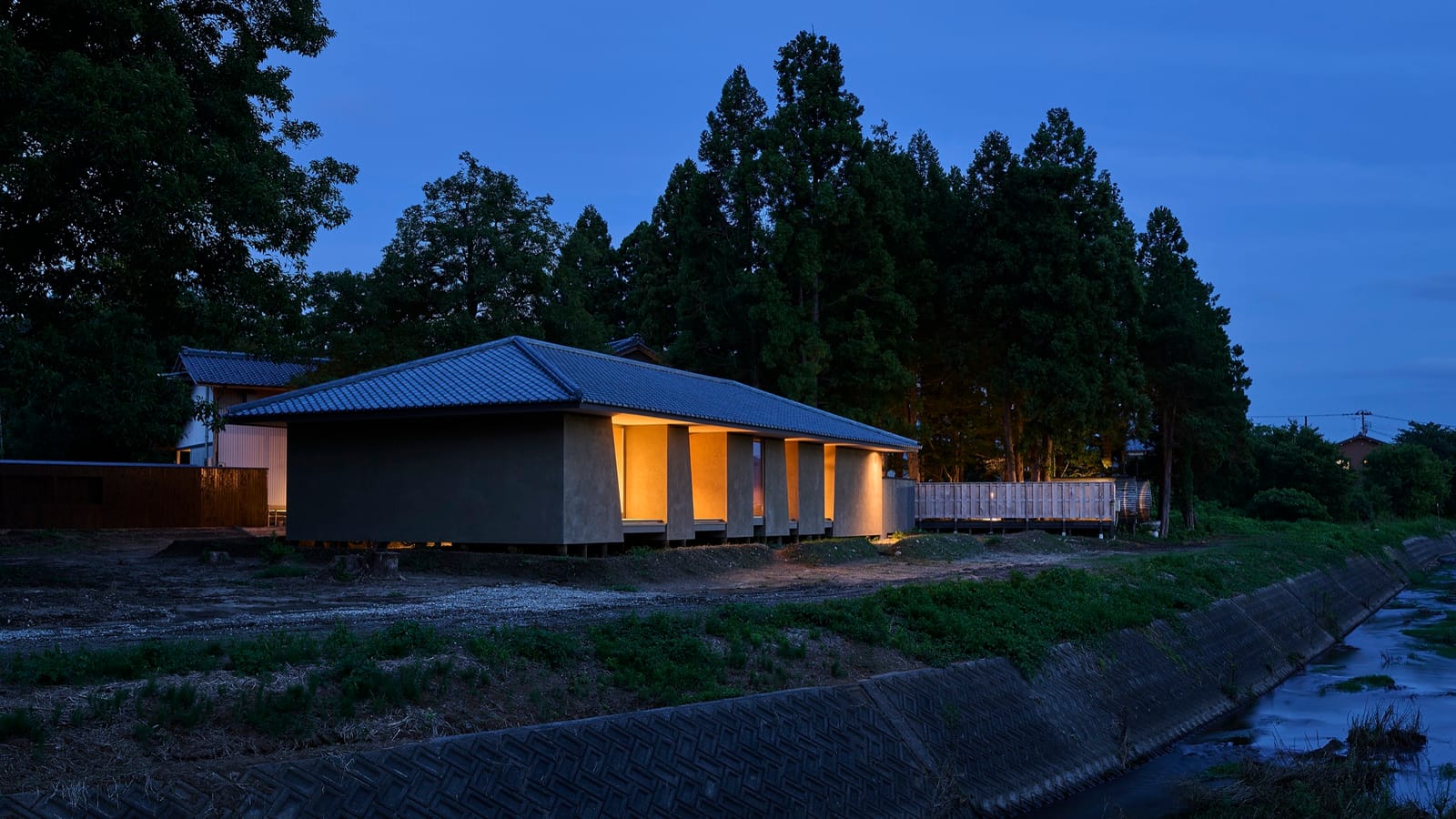
When the architect Kenta Fukunishi first stood on this site, only the name had been decided — a ridge that the Honma family had kept for some three hundred years, looking down over the rice fields. But the name already pointed the way: an architecture that puts down roots. Not built upon the land, but rising out of it.
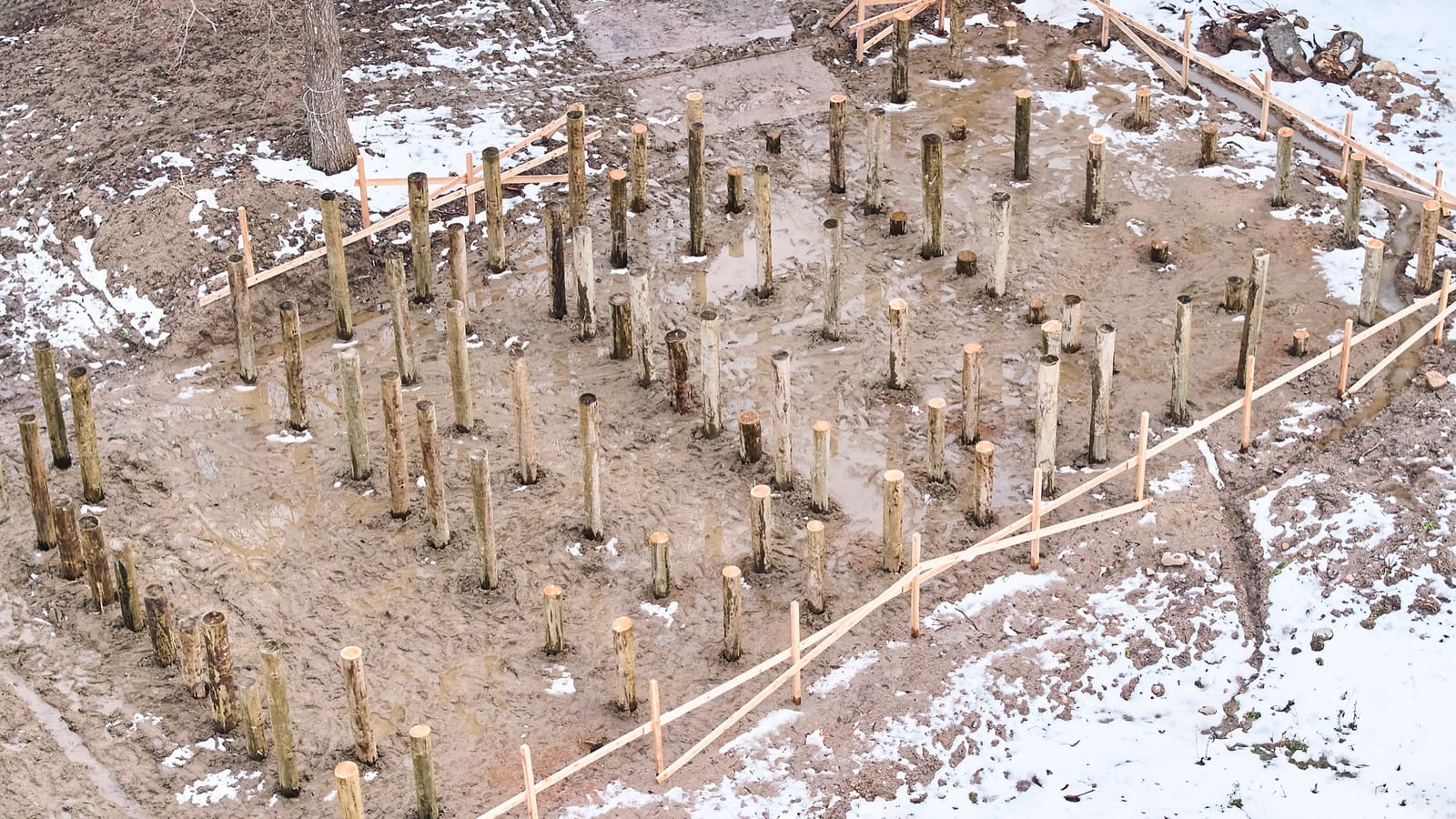
There was only one question: what could be built here, and nowhere else? The answer lay in the soil underfoot. Concrete — not used. Not less of it, but none at all. The ordinary act of driving steel piles and fixing the ground in concrete was set aside; what was driven in were 105 timber piles alone, and the friction of earth against wood holds the building up. Little was dug, nothing carried away, and no steel was used.
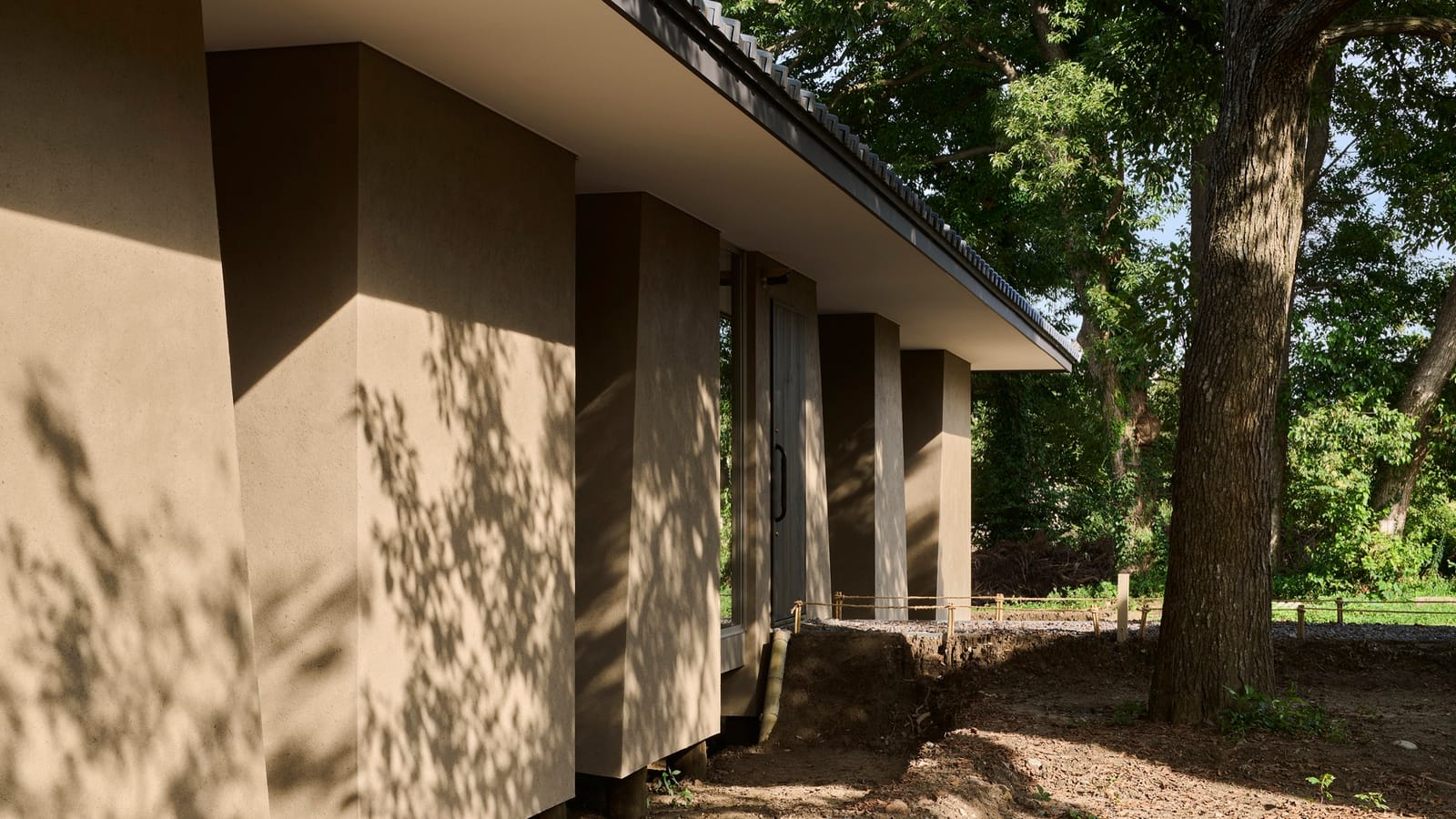
Most of what stands here was made by craftspeople who live nearby — among them Kumagai Construction, now in its third generation, who know Shibata’s hard winters and this land’s handwork better than anyone. Long before the world noticed this architecture, they had carried this way of building as a matter of course.
We do not think of this as a prize for spectacle. Rather, a question was asked — can an inn in a snow-country hamlet, built around this land’s soil, this forest’s timber and the knowledge of the people who live here, stand in the world’s front rank? — and the world nodded.
And when the world looked closely, what it settled its gaze on was not us, but this land.
Né is not a monument to a vanishing way of building. It is a mechanism for carrying those skills into the future: connecting a small hamlet in a corner of Japan directly with the world, so that the hands which made this place keep working, on into the next generation.
Inside, thirteen courses by chef Makoto Fuse trace one turn of this land’s seasons. What the award recognises, in the end, is not a trophy on a shelf but a way of receiving a place — and passing it on.
Architizer A+Awards 2026 — Architecture + Environment — Popular Choice Winner (a category prize decided by public vote from more than 80 countries)
Design: Kenta Fukunishi Architects · Construction: Kumagai Construction · Photography: Hiroki Kawata